Your Malibu view is your headline. When buyers picture life here, they imagine sunsets, ocean air, and a seamless flow from the living room to a beautiful terrace. If you plan to list in the next 6 to 12 months, the right outdoor upgrades can boost perceived value without overbuilding or overspending. This guide shows you what to prioritize, what materials hold up to the coast, and how to present your spaces so they photograph and show at a premium. Let’s dive in.
What Malibu buyers want outside
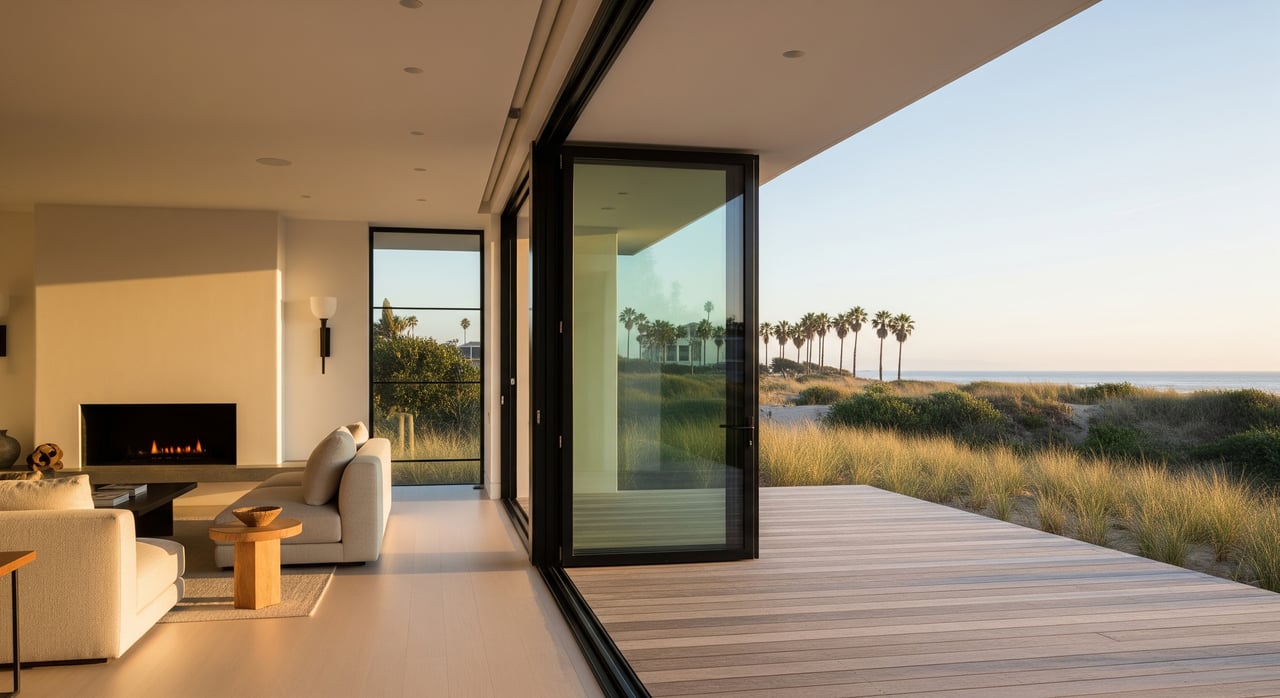
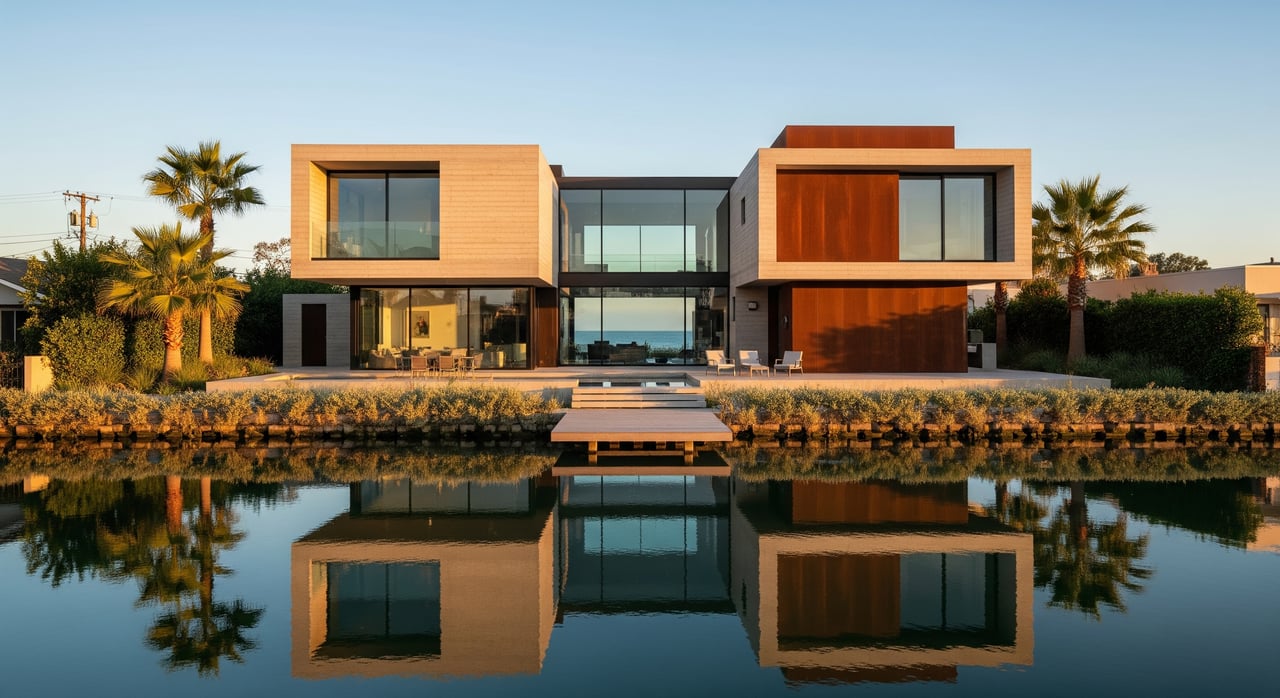
Buyers in Malibu look for indoor–outdoor living, privacy, and spaces that make entertaining easy. They pay for view capture and for terraces that feel usable year-round. Clean design, low-to-moderate maintenance, and features like outdoor kitchens and fire elements are in demand. Presentation often matters more than adding a lot of built area.
Design for Malibu’s climate and rules
Malibu’s setting is stunning, but it is tough on materials and plans. Make choices that stand up to salt air, sun, wind, and local regulations.
Salt air and UV exposure
Salt-laden air speeds up rust and wear on metals, grills, hardware, and some woods. Strong sun fades fabrics and finishes. Choose marine-grade metals, solution-dyed outdoor fabrics, and finishes designed for coastal exposure.
Wind and site conditions
Many bluff and ridgeline homes are windy. Use anchored pergolas, louvered roofs, and tempered glass wind screens where allowed. Keep furnishings low-profile and secure for showings.
Wildfire risk and defensible space
Malibu is a high wildfire-risk area. Plan noncombustible hardscape near the home, maintain defensible space, and choose ignition-resistant materials for decks and structures. Place combustible features carefully and confirm clearances.
Water efficiency and drought cycles
Southern California cycles through water restrictions. Opt for low-water planting, drip irrigation, and smart controllers. Design upgrades with efficiency rules in mind so you stay compliant and manage costs.
Coastal permits and reviews
Many properties fall within the Coastal Zone. New structures, major grading, and shoreline changes can require permits and reviews. Check with the City of Malibu and plan early so your project does not delay your listing timeline.
Upgrades that photograph and sell
These features tend to show beautifully and resonate with Malibu buyers, without risky overpersonalization.
Frame the view first
Your best ROI often starts with view work. Thin or prune vegetation to open sightlines while keeping privacy. Replace bulky railings with tempered glass or sleek metal to clear the horizon. Create simple viewing terraces that direct the eye to the ocean or canyon.
Outdoor kitchens that work
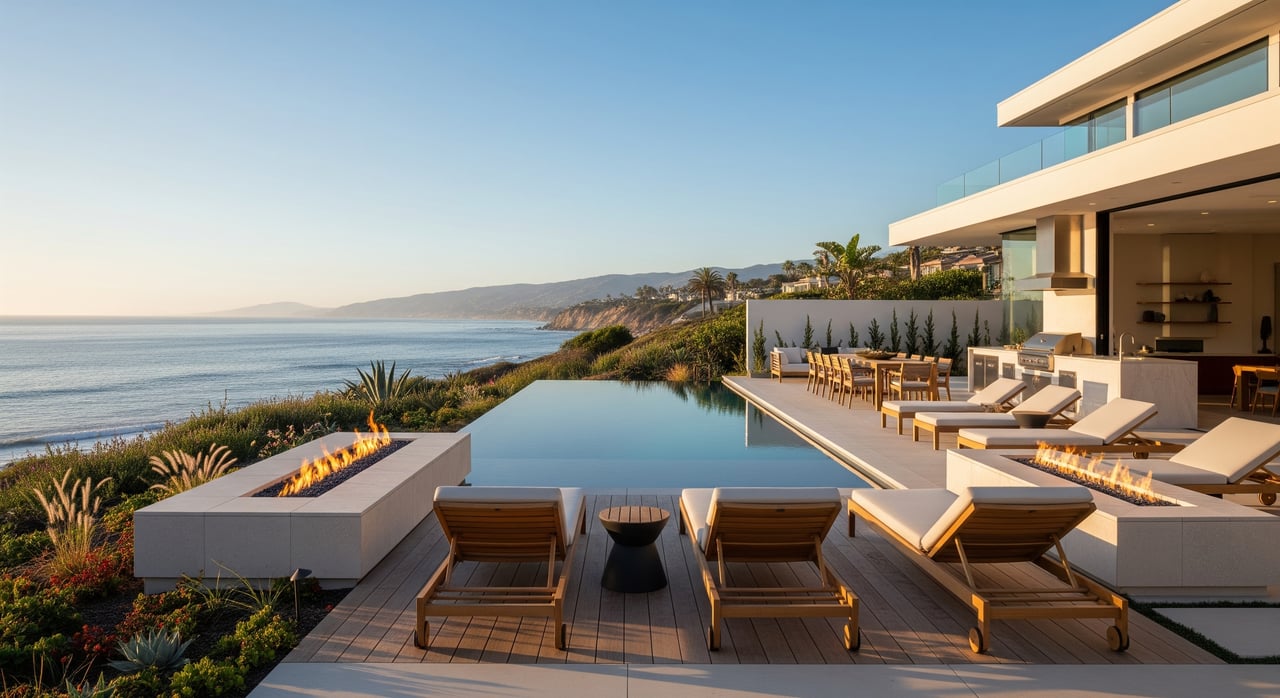
A compact, well-designed grilling station or outdoor kitchen reads as luxury and supports entertaining. Keep the layout simple and close to indoor living for ease. Use marine-grade appliances and cabinetry, and consider a pergola or retractable cover to extend use.
Pools and spas: refresh vs. rebuild
If you already have a pool or spa, a clean, current look sells. Prioritize resurfacing, deck repair, modern water features, and efficient equipment. If adding new, choose restrained forms that align with the architecture and frame the view. Make sure all safety barriers and code requirements are met.
Covered outdoor rooms
Usable covered terraces help buyers picture life at home through more seasons. Add ceiling fans, outdoor-rated lights, and weather control like louvered roofs or screens. Plan noncombustible materials or maintain distance from combustible elements.
Lighting for night-time showings
Layered lighting transforms twilight photos and evening tours. Combine path, step, accent, and architectural lighting with warm LEDs for a welcoming glow. Use shielded fixtures to reduce light spill toward the ocean and neighbors.
Low-water landscape and privacy
Mature, low-maintenance planting fits the coastal look and reduces upkeep. Choose native and Mediterranean species that tolerate salt, wind, and drought. Use layered plantings or planters for privacy that does not block prized views.
Fire features with safety in mind
Buyers love a cozy fire moment. Favor gas-fed fireplaces or fire pits with proper clearances and noncombustible surrounds. Confirm local rules and avoid open wood-burning features where restricted.
Materials that last by the ocean
Smart specs save you from premature wear and buyer red flags.
Metals and hardware
Choose marine-grade stainless steel (316) for exposed fasteners and hardware. Use quality powder-coated aluminum or stainless for frames. Avoid bare, low-grade galvanized metals near the coast.
Decking and pavers
Capped composite decking resists moisture and UV with minimal upkeep. Porcelain pavers are low-porosity and clean-looking for terraces and pool decks. If you prefer hardwoods, be ready for routine oiling and note sourcing considerations.
Railings and glass
Tempered glass railings with stainless or high-grade aluminum hardware open the view. Use systems rated for wind loads common on coastal sites.
Fabrics and cushions
Select solution-dyed acrylics or marine-grade vinyl for cushions and umbrellas. Stick to simple, neutral palettes that photograph well and are easy to refresh before showings.
Appliances and cabinetry
Use outdoor-rated appliances and cabinets designed for salt and sun. Ensure ventilation and proper clearances for gas and electrical.
Sealants and finishes
Choose marine-grade sealants and schedule routine re-sealing. Stainless fasteners at all critical connections help prevent rust stains and failures.
Systems, efficiency, and compliance
Upgrades that feel easy to own help buyers move quickly and confidently.
Energy and water efficiency
For pools and spas, install variable-speed pumps, efficient heaters, and quality covers. For landscapes, use smart irrigation controllers, drip lines, and hydrozoned planting beds. Buyers notice when utility costs are managed by design.
Permits and reviews
Structural decks, gas lines, covered structures, and pools require permits. Properties in the Coastal Zone may need additional approvals. Verify HOA or CC&R rules for colors, visible grills, fencing, and outdoor structures.
Maintenance records
Keep service logs for pools, irrigation, exterior paint or finish work, and outdoor appliances and lighting. A simple binder or digital folder you can share during showings builds trust.
Budgeting for a 6–12 month listing window
Focus on broad appeal, view emphasis, durability, and presentation. Start with smaller, high-impact wins before big construction.
High-impact, lower cost:
- View pruning and arborist work
- Replace bulky railings with clear glass
- LED landscape lighting upgrades
- Deck cleaning, re-staining, and minor repairs
- Fresh outdoor furniture and simple staging
- Low-water replanting and mulch refresh
Mid-range investments:
- Compact outdoor kitchen with marine-grade specs
- Modest covered terrace or pergola
- Pool resurfacing or tile refresh
- New composite decking or porcelain pavers
Think twice before major spend:
- Full pool rebuilds without clear ROI
- Large custom structures or highly personalized designs
- Extensive grading or new terraces that require lengthy approvals
Staging and photography that sell
A curated, uncluttered setup sells the lifestyle and the view.
Staging basics
Pare back furniture and accessories to a few well-scaled groupings. Stage a dining area, a lounge facing the view, and a clean pool zone. Keep table settings simple and neutral so the backdrop shines.
Photo and video must-haves
Schedule twilight photography to showcase lighting, pool glow, and fire features. Use drone shots to show the home’s position and view corridors where allowed. Capture wide interior angles that lead the eye straight outside.
Common red flags to fix now
- Rusted hardware, peeling finishes, or cloudy glass railings
- Overgrown shrubs or trees blocking views or signaling fire risk
- Green or unclear pool water and dated equipment
- Unpermitted structures or visible code issues
- Oddball or overly bespoke features that narrow buyer appeal
Work with a design-first partner
If you want your outdoor spaces to sell a lifestyle, not just a list of features, partner with a team that leads with design and presentation. From pre-sale improvement planning and staging to tiered photography and marketing, you can align every upgrade to what Malibu buyers value most. To plan your timeline and budget with confidence, connect with Jessica Abbott.
FAQs
What outdoor upgrades add the most value in Malibu?
- View framing, glass railings, layered lighting, and a compact outdoor kitchen tend to offer strong perceived value without overcapitalizing.
How should I handle salt air near the ocean?
- Choose marine-grade metals, outdoor-rated appliances, and solution-dyed fabrics, and schedule regular cleaning and re-sealing to prevent corrosion.
Are fire pits allowed for Malibu homes on the market?
- Gas-fed fire features with proper clearances and noncombustible surrounds are typically the safest choice; confirm local rules and any HOA limits.
Should I rebuild my pool before listing?
- Often no. A clean, resurfaced pool with updated equipment and decking usually delivers better ROI than a full rebuild on a resale timeline.
How do I make outdoor areas show well at twilight?
- Use warm LED path, step, and accent lighting; clean glass railings; stage simple seating; and time photos for dusk to highlight the glow and views.
Do I need permits for an outdoor kitchen or pergola?
- Most structural work, gas lines, and electrical need permits, and Coastal Zone properties may require additional approvals. Plan early to avoid delays.