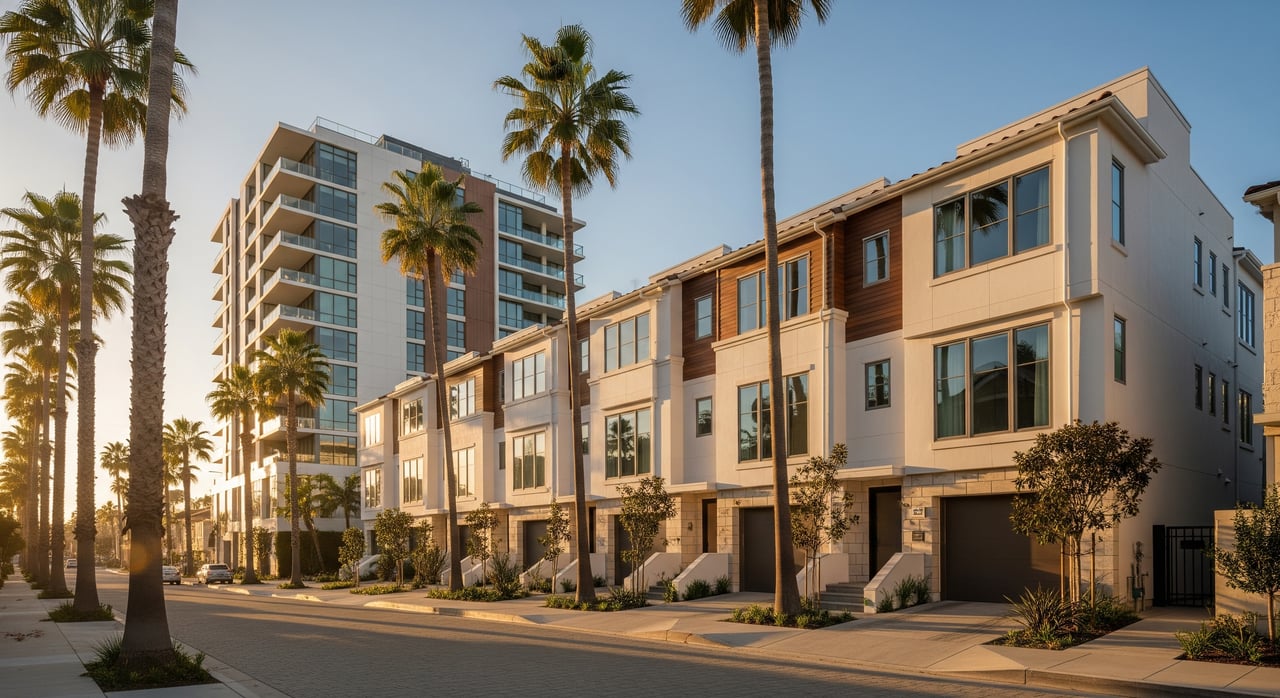
Shopping for a home in Venice, Santa Monica, or Mar Vista and noticing that many prices sit above typical loan limits? You are not alone. On LA’s Westside, jumbo financing is common, and understanding it can help you write cleaner offers and close with less stress. In this guide, you will learn how jumbo loans differ from conforming loans, what lenders look for, how timelines shift, and how to keep your offer competitive in a fast market. Let’s dive in.
Why jumbo loans matter on the Westside
Westside neighborhoods often feature high-end single-family homes, architect-designed builds, and premium condos. Purchase prices frequently push above conforming loan limits, which means many buyers need jumbo financing. That choice can change your paperwork, your timeline, and how sellers view your offer.
A jumbo loan is any mortgage amount above the conforming loan limit set by the Federal Housing Finance Agency for the county where the property is located. Conforming loans can be purchased by Fannie Mae and Freddie Mac. Jumbos are not, so lenders and investors apply stricter standards. The result is more documentation, tighter review, and a potential for slightly longer closings.
Conforming vs. jumbo basics
Conforming limits are set each year and can differ between the baseline national limit and a higher high-cost county limit. Los Angeles County uses a high-cost limit that updates annually. The limit applies to the loan amount, not the purchase price, so your down payment directly affects whether you fall under or above the line.
Because limits change each year, confirm the current-year Los Angeles County limit with your lender before you write offers. Doing this early can help you avoid surprises during escrow.
Loan sizing examples (illustrative)
Use these examples to frame your plan. Always verify current limits and pricing with your lender.
- Purchase $1,400,000 with 20% down → loan $1,120,000. This is often within the high-cost conforming range when limits are near recent levels.
- Purchase $1,500,000 with 20% down → loan $1,200,000. This typically moves into jumbo territory.
- Purchase $2,000,000 with 20% down → loan $1,600,000. Jumbo.
- Purchase $3,000,000 with 35% down → loan $1,950,000. Jumbo.
If you sit near the limit, a modest change in down payment can shift you from jumbo to conforming. Your lender can model scenarios to show the tradeoffs between cash to close, rate options, and mortgage insurance.
Rates and market context
Historically, jumbo loans carried a modest rate premium compared to conforming loans. In recent years, that spread has moved around and at times narrowed. Expect comparable but sometimes slightly higher jumbo rates, with pricing that varies by lender, investor appetite, and overall rate movement. The smart move is to shop multiple lenders and compare total cost, not just the headline rate.
Underwriting standards to expect
Jumbo loans follow many of the same fundamentals as conforming loans, but lenders usually tighten the rules. Plan ahead to keep your file strong and escrow smooth.
Credit and down payment
- Conforming loans can allow credit scores starting around the low 600s, with best pricing at higher scores.
- Jumbo loans commonly prefer credit scores in the 700–720 range or higher for standard pricing.
- Conforming programs can allow 3–5% down on a primary residence.
- Jumbo purchases often require 10–20% down, and many lenders favor 20% or more for best pricing. Second homes and investment properties may need 20–30% or higher.
Debt-to-income ratio (DTI)
- Conforming loans often allow DTI up to about 45% with flexibility in some cases.
- Jumbo investors frequently target DTI at or below 43–45%. Some may consider up to about 50% with strong credit, lower loan-to-value, and ample reserves.
Cash reserves
- Conforming loans may require 2–6 months of reserves depending on your profile.
- Jumbo loans commonly require 6–12 months of principal, interest, taxes, and insurance for primary residences, and more for second homes or investments. High-net-worth borrowers with strong liquidity may see tailored reserve rules with certain lenders.
Documentation checklist
Both loan types verify income, assets, and credit. Jumbos often ask for additional depth. Expect to provide:
- Two years of personal tax returns and business returns if self-employed.
- W-2s and recent pay stubs for employees.
- 60–90 days of bank statements and documentation for large deposits or gift funds.
- For self-employed or nontraditional income, items like P&Ls, 1099s, and CPA letters. Some jumbo programs offer bank-statement qualifying, which can help certain buyers but may carry different pricing.
Appraisals on Westside properties
Westside homes can be highly customized, which makes comparable sales harder to find. Lenders may require a full interior and exterior appraisal and may ask for a second appraisal if comps are thin. Appraisals can take longer and may come in conservative if the property is unique. Ordering early after acceptance and aligning on valuation strategy with your lender and agent can reduce surprises.
Timeline and offer strength
Closing timelines
A conforming purchase often closes in 30–45 days. Jumbos can take 30–60 days because of extra documentation, more detailed underwriting, and appraisal complexity. Starting your file early and responding quickly to conditions are the best ways to keep momentum.
How financing affects negotiation
Sellers tend to rank offer strength in a predictable order: all-cash, then strong conventional financing, then jumbo pre-approvals, followed by weaker or uncertain financing. The gap between jumbo and conforming can shrink when you present a fully documented pre-approval. Ask your lender for a pre-underwrite so you can show that income, assets, and reserves are reviewed. It signals lower risk and can improve your position next to competing offers.
Tactics to strengthen a jumbo offer
- Request a pre-approval that states documentation on file and reserves verified.
- Keep financing and appraisal timelines realistic based on your lender’s capacity and the property type.
- Consider a slightly larger down payment to improve pricing and reduce lender scrutiny.
- Use a larger earnest money deposit and shorter inspection windows when comfortable with the risk.
- Discuss appraisal gap strategies with your agent. Understand how much shortfall you can cover if needed.
Westside buyer scenarios
Scenario A: Entering conforming range
Price $1,390,000 with 20% down results in a loan of $1,112,000. This can fit under typical high-cost limits seen in recent years. You may see simpler documentation and faster timelines than a jumbo.
Scenario B: Barely jumbo
Price $1,450,000 with 20% down results in a loan of $1,160,000. That usually crosses into jumbo. Expect closer review of income and reserves and prepare extra documentation early.
Scenario C: Clear jumbo
Price $2,500,000 with 30% down results in a loan of $1,750,000. The lender will pay close attention to DTI, reserves, and appraisal support. Explore whether a larger down payment or portfolio lender improves pricing and certainty.
Strategy for self-employed and complex income
If you have multiple income streams, K-1s, or seasonality, start underwriting early. Some jumbo programs allow bank-statement qualifying for certain profiles, though terms can differ from standard conforming. Share two years of returns, current-year trends, and a preliminary P&L with your lender so they can structure the right program and timeline up front.
Appraisal planning on unique homes
For design-forward homes and custom renovations, comps may be limited. Align with your lender and agent on valuation, comparable selection, and timing. If you anticipate sensitivity on value, consider an offer strategy that allows enough time for a second appraisal if requested, or use an appraisal gap clause that matches your risk tolerance.
Your Westside buyer checklist
- Confirm the current FHFA conforming limit for Los Angeles County.
- Get a fully documented pre-approval that verifies income, assets, and reserves.
- Prepare 60–90 days of bank statements and two years of tax returns. Include W-2s and recent pay stubs if employed.
- Document all large deposits and gift funds with letters and statements.
- Ask your lender how many months of PITI reserves are required and which accounts qualify.
- If selling and buying, explore bridge financing, a HELOC, or portfolio options to keep contingencies short.
- Outline an appraisal plan with your lender and agent, especially for unique or architect-designed properties.
- Price out both conforming and jumbo scenarios if you sit near the limit. A small down payment adjustment can change programs and timelines.
Next steps
The right financing strategy can help you compete for the Westside home you want while keeping your risk in check. Get document-ready early, align on appraisal strategy, and choose a lender experienced with high-cost coastal markets. If you want a second set of eyes on neighborhood dynamics, valuation nuances, and negotiation strategy, connect for a tailored plan that fits your goals.
Ready to map your financing path and strengthen your offer in Venice, Mar Vista, Santa Monica, or nearby? Schedule a consultation with Jessica Abbott.
FAQs
What is a jumbo loan on LA’s Westside?
- A jumbo loan is a mortgage amount above the FHFA conforming limit for Los Angeles County, which pushes it outside Fannie Mae and Freddie Mac guidelines and into stricter lender standards.
How do I know if I need a jumbo loan?
- Compare your projected loan amount, not purchase price, to the current Los Angeles County conforming limit and adjust your down payment to see whether you fall under or above it.
Are jumbo rates always higher than conforming?
- Not always; the spread changes with market conditions and investor demand, so you should compare quotes from multiple lenders to evaluate total cost.
Do jumbo loans take longer to close?
- Often yes; plan for about 30–60 days due to added documentation, detailed underwriting, and potential appraisal complexity on higher-priced homes.
How can I make a jumbo offer more competitive?
- Get a fully documented pre-approval, set realistic contingencies, consider a larger down payment, and plan for appraisal strategies like gap coverage when appropriate.